Why it's worth taking out
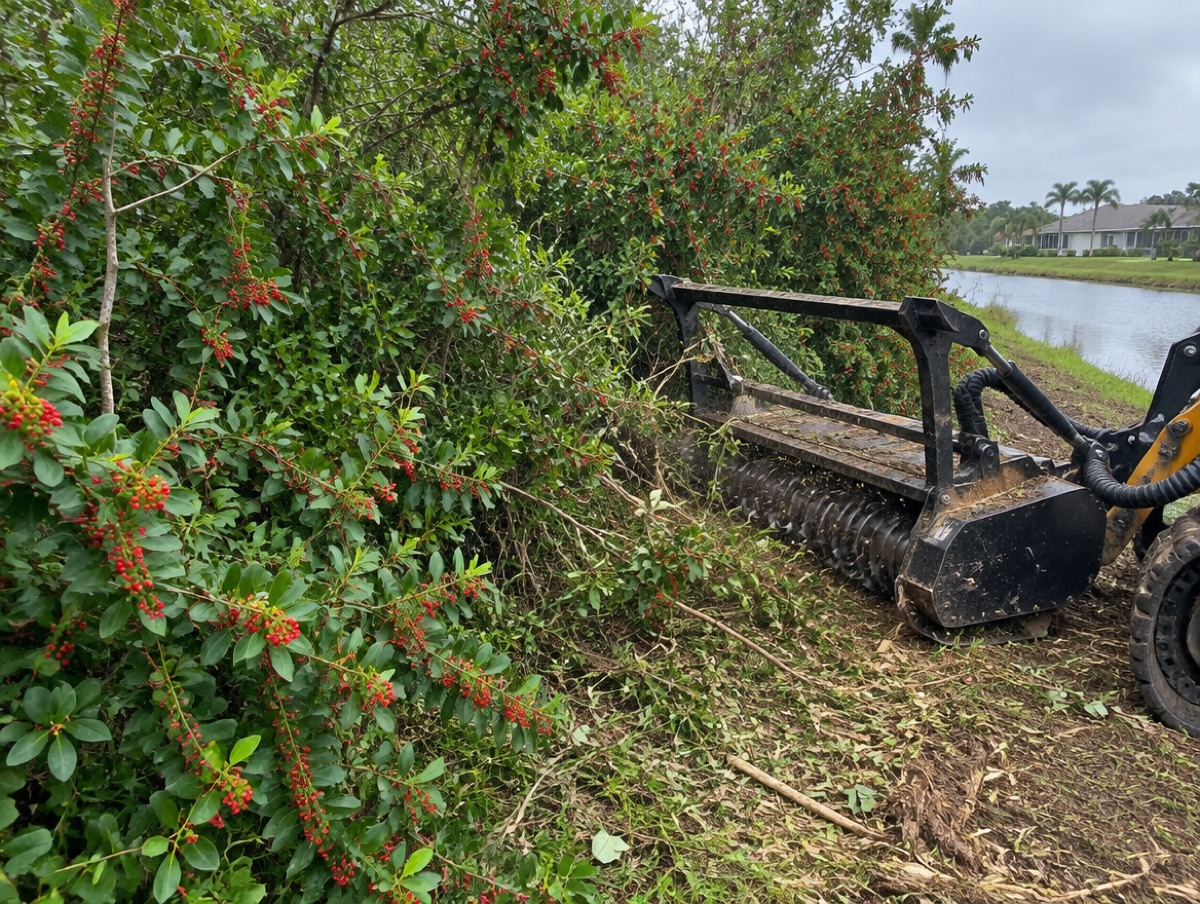
Brazilian peppertree is on Florida's Noxious Weed List, rated Invasive by UF/IFAS, and listed as Category I by the Florida Invasive Species Council (UF/IFAS plant directory). Category I plants are the ones that have already altered native plant communities and harmed how natural areas work (UF/IFAS, Florida's invasive plant lists).
It often has company. Melaleuca is on both the federal and Florida noxious weed lists and is Category I (UF/IFAS). Air potato is Category I and a Florida noxious weed too (UF/IFAS). If they're on the same ground, deal with them on the same visit.
Cutting it down isn't the end
UF/IFAS says mechanical removal works for small infestations, but large stands resprout vigorously, so herbicide or stump treatment is usually needed (UF/IFAS plant directory). Mulch a big thicket and walk away, and you'll likely see green shoots coming back from every stump.
So the real question for a crew is what happens after the mulcher leaves. Some treat cut stumps as they go; others come back for the regrowth. Ask who does the herbicide work, what they use near water, and whether a return visit is in the price.
Permits are lighter for pepper
Most codes in Brevard treat invasive trees differently from native ones:
- Melbourne exempts listed prohibited invasive trees, Brazilian pepper among them, from its tree permit (Melbourne LDC s. 9.272).
- Rockledge exempts Brazilian pepper, melaleuca, Australian pine and other listed species (Rockledge LDR s. 108-51).
- West Melbourne exempts listed invasives, including Brazilian pepper, melaleuca, air potato and cogongrass (West Melbourne Code, Chapter 71).
- Titusville lets FLEPPC Category I nuisance trees come out without a tree permit under s. 30-35 (Titusville LDR).
- Palm Bay excepts prohibited species after city approval and lists Class I invasive species among its accepted reasons for removal (s. 175.014; s. 175.003).
- Satellite Beach went a step further with a deadline: Brazilian pepper, melaleuca and Australian pine had to be gone from the whole city by January 8, 2016 (Satellite Beach s. 30-706).
- Unincorporated Brevard exempts invasive plant removal from its land clearing rules, with limits near water covered below (s. 62-4334).
Near the water, the rules tighten
Pepper along a canal, a pond or the lagoon shore is where Brevard's exemption narrows. Inside shoreline protection buffers, seaward of the Coastal Construction Setback Line and in wetlands, invasive removal has to be done by hand, with the roots left in the ground and an aquatic-approved herbicide (Brevard County Code s. 62-4334). A mulcher at the water's edge doesn't fit that.
Mangroves on the same shoreline are a separate matter under state law, with their own rules on who may trim them (F.S. 403.9329). This site doesn't arrange mangrove work. Filling or building in wetlands may also need a state Environmental Resource Permit (SJRWMD).
An exemption from the tree permit doesn't cancel the wildlife rules either. A burrow under a pepper thicket still gets its 25 feet (FWC).
Questions for the crew
Pepper jobs differ mostly in what happens after the cutting. Ask:
- Will the pepper be mulched in place, or cut and hauled?
- How are the stumps treated, by whom, and when?
- What changes for the stretch inside a shoreline buffer or near a wetland?
- Is a return visit for resprouts included?
- Is there air potato or melaleuca to take out on the same trip?
Questions people ask
Will Brazilian pepper grow back after mulching?
Large stands usually do. UF/IFAS says they resprout vigorously after mechanical removal, so the cut stumps need herbicide or stump treatment (UF/IFAS). Plan on a follow-up.
Do I need a permit to remove Brazilian pepper?
Often not a tree permit. Melbourne, Rockledge, West Melbourne and Titusville exempt it or other listed invasives in their codes, Palm Bay allows it after city approval, and the unincorporated county exempts invasive removal outside shoreline buffers, the coastal setback line and wetlands. Confirm with your city before work starts.
Can the pepper along my pond be bulldozed?
In unincorporated Brevard, not inside a shoreline protection buffer or a wetland. There the code calls for hand-clearing, leaving the roots in the ground and using an aquatic-approved herbicide. If you're inside a city, ask the city what applies at the water's edge.
Can the cut pepper be burned?
Any land clearing pile burn needs Florida Forest Service authorization and setbacks most lots can't meet (FFS, Know the Law), and the authorization, not the county's drought ban, is what decides it, since state-permitted burns are excluded from that ban (s. 50-1). Mulching or hauling is the usual route.
What else should come out with it?
Melaleuca and air potato, both Category I invasives, and Australian pine, which Melbourne and Rockledge list with pepper. Taking them out in one visit saves a second mobilization.
Last reviewed October 7, 2026. General information, not legal or professional advice. Check the linked sources for the current rules.
Sources
- UF/IFAS Plant Directory, Brazilian peppertree
- UF/IFAS, Out of the weeds: Florida's nonnative and invasive plant lists
- UF/IFAS Plant Directory, Melaleuca
- UF/IFAS Plant Directory, Air potato
- Melbourne LDC s. 9.272, tree protection
- Rockledge LDR s. 108-51, tree removal exemptions
- West Melbourne Code, Chapter 71 tree permits and exemptions
- Titusville LDR, Chapter 30 tree protection (s. 30-35 and s. 30-39)
- Palm Bay Code of Ordinances, Chapter 175 (tree protection and land clearing)
- Palm Bay Code s. 175.003, criteria for tree removal
- Satellite Beach Code s. 30-706, nuisance trees
- Brevard County Code s. 62-4334, exemptions
- Florida Statutes s. 403.9329, professional mangrove trimmers
- St. Johns River Water Management District, do you need a permit?
- FWC, Gopher tortoise permits
- Florida Forest Service, Know the Law (land clearing burns)
- Brevard County Code s. 50-1, open burning