Last reviewed October 7, 2026. General information, not legal or professional advice. Check the linked sources for the current rules.
The bird behind the rule
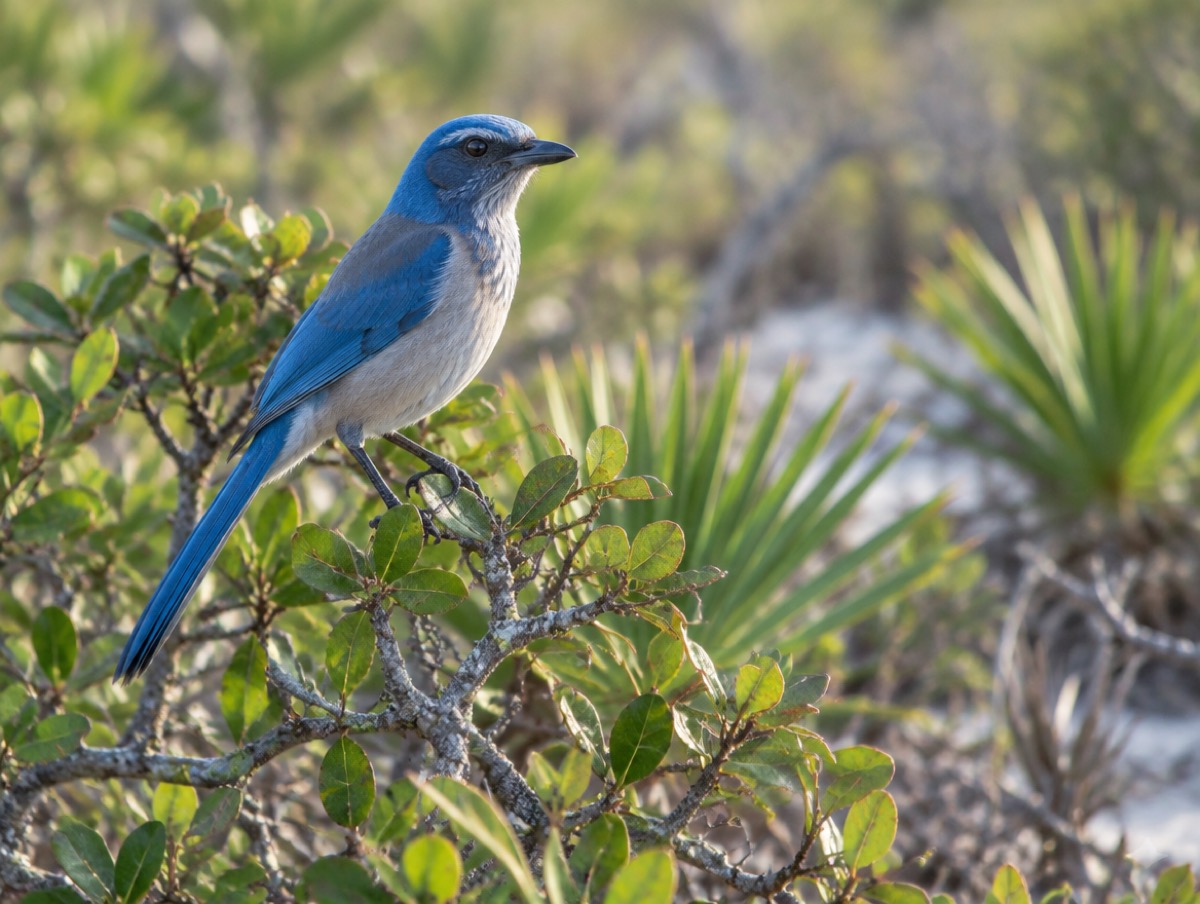
The Florida scrub-jay is federally threatened. FWC describes its home as sand pine and xeric oak scrub and scrubby flatwoods on ancient sandy ridges, coastal dunes and inland river sand deposits. It puts the population decline over the past century at 90 percent, driven by development that breaks habitat into pieces and by fire suppression (FWC, Florida scrub-jay).
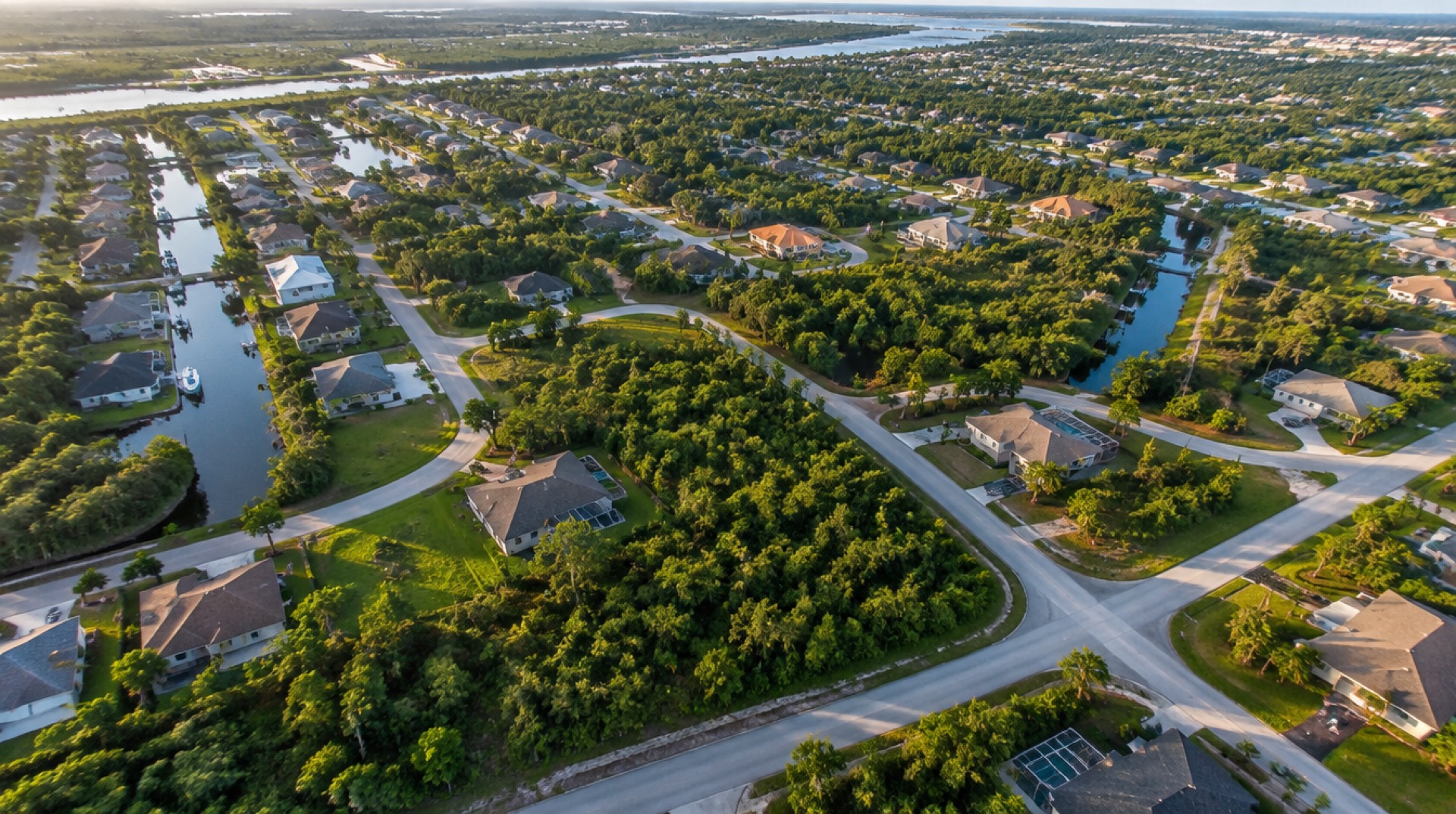
In Palm Bay, the mapped areas are parcels in the Port Malabar subdivisions in the southeast section of the city (City of Palm Bay, Scrub Jay Lots). If you're buying in that part of Port Malabar, check the parcel before you close.
How Palm Bay's habitat plan works
Palm Bay holds a Habitat Conservation Plan and an Incidental Take Permit approved by the U.S. Fish and Wildlife Service, covering the Florida scrub-jay and the eastern indigo snake. The permit is city-wide and lets owners of lots in the scrub-jay areas build. In exchange, the city collects an environmental service fee with each building permit, and a conservation agency designated by the Service uses the money to help buy large tracts of habitat. The fee rules are in Chapter 172 of the city code (City of Palm Bay, Habitat Conservation Plan).
Before the city plan, individual lots went through federal permits on their own. A May 11, 2006 Federal Register notice, for example, covered incidental take permits for two Palm Bay home lots, about 0.48 acre of scrub-jay foraging habitat in all, within 438 feet of where jays had been seen (Federal Register, May 11, 2006). The city's scrub-jay lots page says owners could get building permits through the city starting April 23, 2007 (City of Palm Bay, Scrub Jay Lots).
The March 1 to June 30 rule
Owners of lots inside the scrub-jay polygons may build, but may not clear from March 1 through June 30 each year (City of Palm Bay, Habitat Conservation Plan). The city lists these exceptions:
- Biological surveys show there is no active scrub-jay nest.
- The vegetation is a persistent fire hazard to developed properties next door.
- The work is within 25 feet of a developed lot next door, where nuisance vegetation is growing onto that property.
Planning around the window
The closure is what wrecks schedules. Palm Bay's clearing permit for a house lot under 1 acre needs a building permit already under review, and the clearing application has to give its number (Palm Bay Code s. 175.014). House plans that go in during February can leave the lot waiting until July. If you can, work backward from March 1.
Gopher tortoises are a separate track. The city's habitat page says tortoise permits come from FWC, not from the city plan (City of Palm Bay). FWC's survey also has its own clock: if clearing doesn't start within 90 days of the last full survey or capture, the site gets surveyed again (FWC permitting guidelines). On a lot with both issues, the tortoise work, the permit review and the spring closure all have to line up. See the gopher tortoise guide.
Is your lot one of them?
The city's scrub-jay lots page links a list of parcels inside the occupied habitat polygons, drawn from the city's unit map with scrub polygons supplied by the Fish and Wildlife Service (City of Palm Bay, Scrub Jay Lots; parcel list). The list goes by Port Malabar unit, block and lot, so check the legal description on your deed against it before you buy, sign a building contract or book a crew.
A lot that isn't on the list has answered the city's question, not every question. A parcel outside the polygons can still have tortoise burrows or sit beside scrub. If you aren't sure, ask the city's Growth Management department before anything is cut.
Outside Palm Bay
Inside designated occupied scrub-jay and gopher tortoise habitat, Melbourne's code allows no trimming, removal or alteration of vegetation unless the U.S. Fish and Wildlife Service approves (Melbourne LDC s. 9.272). Elsewhere in the county, the Service still takes scrub-jay permits project by project. Recent Brevard notices cover a commercial development in 2023 (Federal Register, 2023) and a taxiway rehabilitation at Melbourne Orlando International Airport in 2026 (Federal Register, 2026).
In unincorporated Brevard, the county's Natural Resources Management office offers desktop property reviews that cover protected wildlife, a useful first check before buying land (Brevard NRMO).
What to tell the crew
When you ask for a quote on a lot in a scrub-jay area, say so up front, along with the parcel ID and the date the building permit went in. The crew you're matched with can then quote with real dates in mind. If the job lands inside the closure, the right answer is to wait for July.
Questions people ask
Can I build on a scrub-jay lot in Palm Bay?
Yes. The city's incidental take permit lets owners of lots in the scrub-jay areas build, and the city collects an environmental service fee with each building permit it issues (City of Palm Bay).
Can I clear in April if no jays live on my lot?
Only under the city's exception for lots where biological surveys show no active nest. Ask the city's Growth Management department what survey it accepts before you book a crew.
Does the scrub-jay plan cover gopher tortoises?
No. The city's plan covers the Florida scrub-jay and the eastern indigo snake. Gopher tortoise permits come from FWC (City of Palm Bay).
How much is the environmental service fee?
The city sets it under Chapter 172 of its code. Check the current amount with the city when you apply for the building permit. This page doesn't quote fees.
Sources
- FWC, Florida scrub-jay species profile
- City of Palm Bay, Habitat Conservation Plan
- City of Palm Bay, Scrub Jay Lots
- City of Palm Bay, parcels in Florida scrub-jay occupied habitat polygons
- Federal Register, May 11, 2006: incidental take permits for Palm Bay home lots
- Federal Register, Aug. 8, 2023: scrub-jay incidental take permit application, commercial development, Brevard County
- Federal Register, 2026: scrub-jay incidental take permit notice, Brevard County
- Palm Bay Code of Ordinances, Chapter 175 (tree protection, land clearing and grubbing)
- FWC, Gopher Tortoise Permitting Guidelines (rev. April 2023)
- Melbourne LDC s. 9.272, tree removal permits
- Brevard County Natural Resources Management, permitting review process