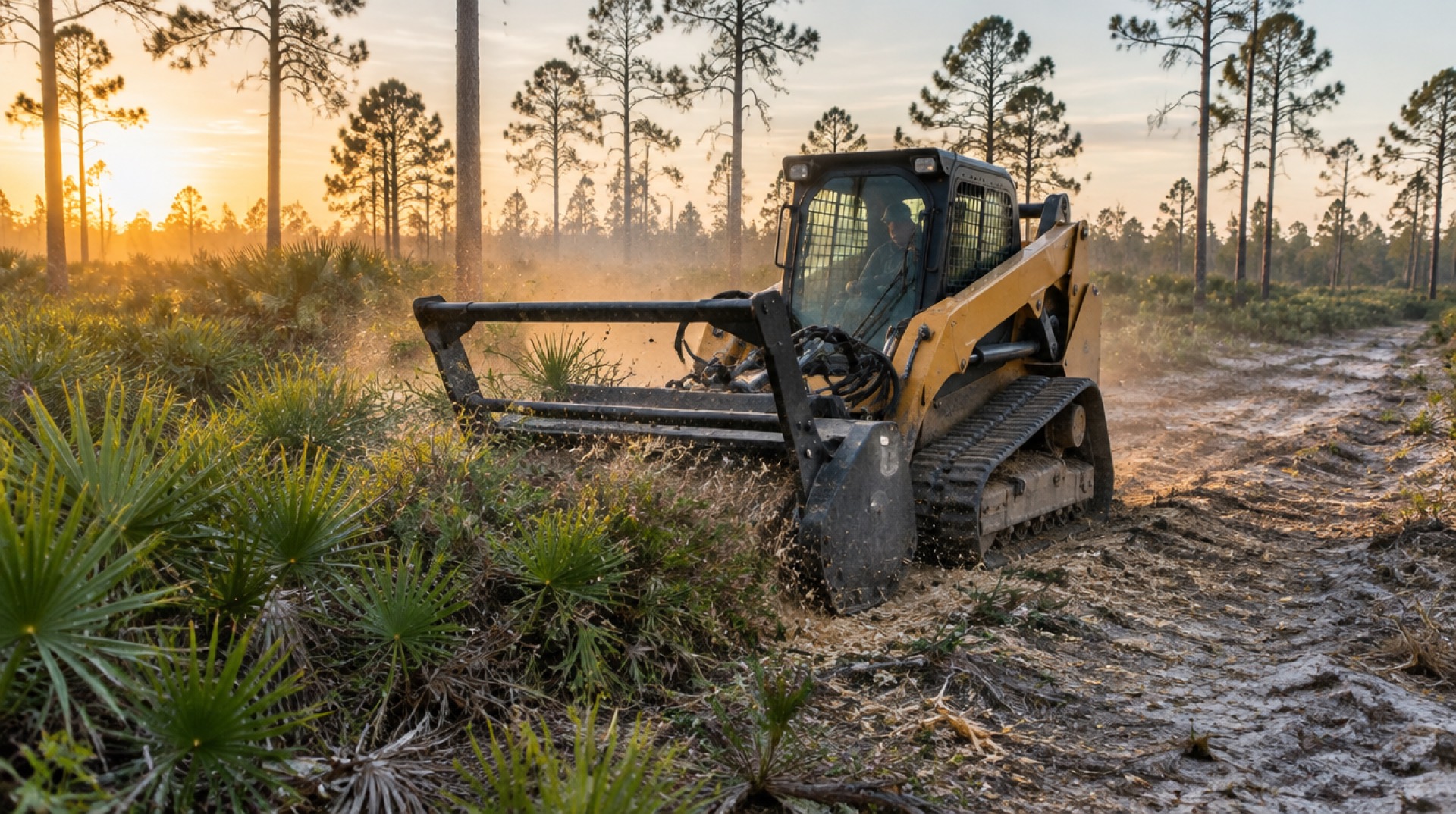
What underbrush work covers
The target is everything between the ground and the canopy: saw palmetto, wax myrtle, grapevine and greenbrier, saplings, dead limbs and old fallen trunks. The oaks and pines overhead stay. Done well, a lot that looked like a green wall from the street turns into shaded open ground you can see through.
Crews often use a forestry mulcher for the bulk of it and switch to saws and hand tools close to trunks that are staying. On a small lot, a skid steer with a brush cutter may do the job. Ask which method the crew plans for your ground and why.
Permits for underbrush
Palm Bay calls this grubbing. Its grubbing permit covers removing underbrush by hand clearing, roto-chopping or mulching in place. Single- and two-family sites under 1 acre are exempt from that permit, and so are areas of a quarter acre or less. It never covers removing protected or specimen trees or mangroves, or scraping and filling land (Palm Bay Code s. 175.015).
In unincorporated Brevard, land clearing means removing or cutting down vegetation, root-raking included, but not allowable mowing, trimming or pruning (s. 62-4332), and it needs a permit unless the property is exempt (s. 62-4337).
For lighter jobs the county has a small scale land clearing permit. Technically an administrative waiver, it lets you take out as much as half the understory or 1 acre, whichever is smaller, plus up to 10% of the native canopy. The permit is good for 30 days from issue, a property can get just one per calendar year, specimen trees are off the table, and the county does a site visit first (s. 62-4338).
Keep the machine off the roots
Brevard's code counts damage to a kept tree as land clearing. Its list includes soil compaction and trunk or root injury from machinery, fuel or herbicide spilled over the roots, materials stored under the tree, and grade changes over the root system (s. 62-4338). It makes a good checklist even if your lot is inside a city.
Agree on which trees stay before work starts. Ask the operator to pull brush away from those trunks instead of driving into the root zone, and not to leave chips piled against the bark.
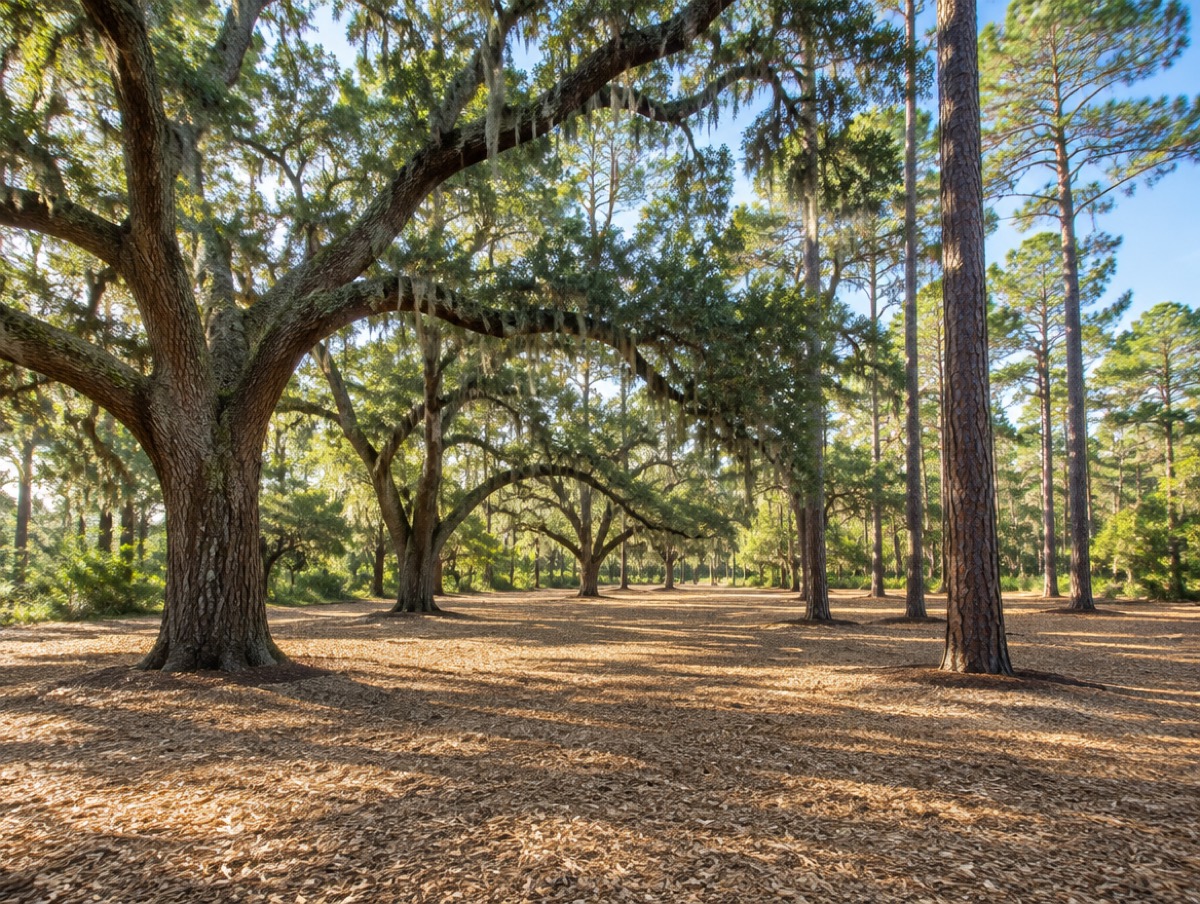
Look before the brush comes down
Gopher tortoises dig in dry, sandy ground, and palmetto lots often sit on exactly that. FWC requires a permit to clear within 25 feet of a potentially occupied burrow and none if the work keeps that distance (FWC). Walk the lot, flag the burrows, and point them out before anyone quotes.
In Melbourne, trimming, removing or altering vegetation in designated occupied scrub-jay or gopher tortoise habitat requires approval from the U.S. Fish and Wildlife Service (Melbourne LDC s. 9.272). Scrubby oak on white sand anywhere in the county deserves a second look; the scrub-jay guide explains why.
Check the pines for nests, too. Florida raptors, their nests and eggs are protected, and removing an active hawk nest takes a federal permit (FWC raptor permits).
Questions for the crew
Underbrush quotes look alike on paper. The answers to these make the difference.
- Which trees are staying, and how will the roots be protected?
- Mulched in place, or cut and hauled?
- How close to the ground will the brush be cut?
- What regrowth should you expect, and is a follow-up pass priced?
- What happens if a burrow or a nest turns up mid-job?
Questions people ask
Will palmetto grow back after mulching?
Ask the crew. Regrowth depends on the plant, the season and how low it was cut, and a crew that works your area has seen it on similar ground. Brazilian pepper is the known problem: large stands resprout unless the stumps are treated. See Brazilian pepper removal.
Do I need a permit to clear underbrush?
It depends on where the land is. In Palm Bay, single- and two-family sites under 1 acre are exempt from the grubbing permit (s. 175.015), but trees are a separate matter. The unincorporated county requires a permit for land clearing unless the property is exempt. The permit guide covers each area.
Can the big oaks stay?
That's the point of underbrush work. Mark the trees you want kept and talk through the root zone with the crew. If some trees need to go as well, see selective clearing.
What's the difference between underbrush removal and land clearing?
Underbrush work takes out the low growth and keeps the canopy. Land clearing takes trees out too, and often stumps and roots, to get ground ready to build. Brevard and Palm Bay treat the two differently in their codes, so the permit question changes with the job.
What happens to the brush?
Usually it's mulched in place and left as a chip layer. Some owners want it hauled for a cleaner look, which adds trucks and time. Burning is rarely workable on a residential lot because the Florida Forest Service setbacks are hard to meet; forestry mulching explains them.
Last reviewed October 7, 2026. General information, not legal or professional advice. Check the linked sources for the current rules.
Sources
- Palm Bay Code of Ordinances, Chapter 175 (tree protection and land clearing)
- Brevard County Code s. 62-4332, definitions
- Brevard County Code s. 62-4337, permit required
- Brevard County Code s. 62-4338, land clearing permit standards
- FWC, Gopher tortoise permits
- Melbourne LDC s. 9.272, tree protection
- FWC, Raptor permits